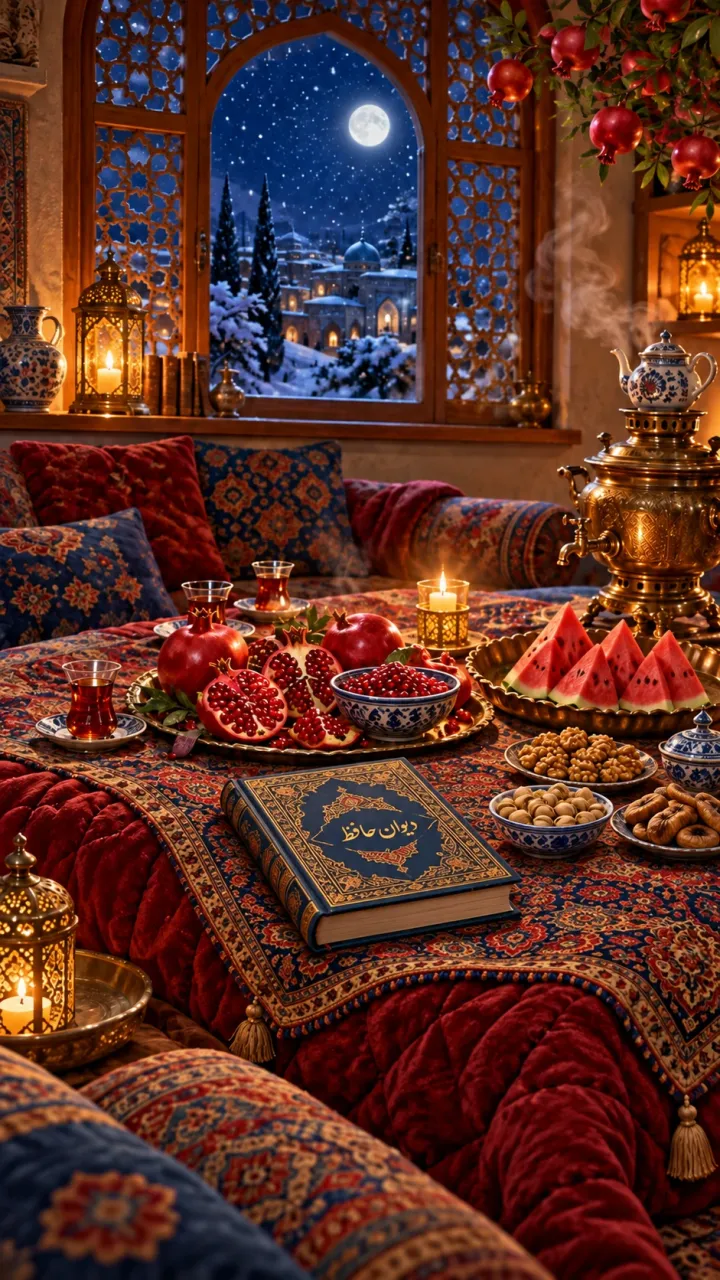
On the night of the winter solstice, around December 20 or 21, Iranian families gather to celebrate Yalda: the longest and darkest night of the year. From the next day on, the days grow longer and the light comes back.
So Yalda is really a celebration of light winning over darkness, and of the people we love keeping us company through the long night.
What the name means
Yalda comes from a Syriac word meaning “birth”: the birth of the sun after the longest night. The night is also called Shab-e Chelleh, because it opens the forty coldest days of winter.
In 2022, UNESCO added Yalda/Chella to its list of the world’s intangible cultural heritage.
What families do on Yalda
Every family has its own way, but most Yalda nights include:
- Staying up late together, so the long night passes in good company.
- Red fruits, pomegranate and watermelon, whose colour stands for the dawn and the warmth of life. An old saying goes that watermelon on Yalda keeps you healthy all winter.
- Ajil, a mix of nuts and dried fruits, passed around the table.
- Reading Hafez: each person makes a wish and opens the Divan of Hafez at random for a “fal”.
- Stories from grandparents, often from the Shahnameh.
How to explain it to a child
Keep it short and warm: “Tonight is the longest night of the year. We stay up together so it doesn’t feel long, and from tomorrow the sun stays a little longer every day.”
Young children don’t need the history. They need the feeling: the candles, the red fruit, the family around them, and the idea that light always comes back.
Ideas to try at home
- Let your child open a pomegranate on a tray and count the seeds.
- Turn off the lights for a minute, then light candles together: the light coming back.
- Read one short line of Hafez and let your child choose the family’s fal.
- Video call the grandparents, or invite friends. Yalda is about being together.
- End the night with a story, ideally one where your child is the hero.