
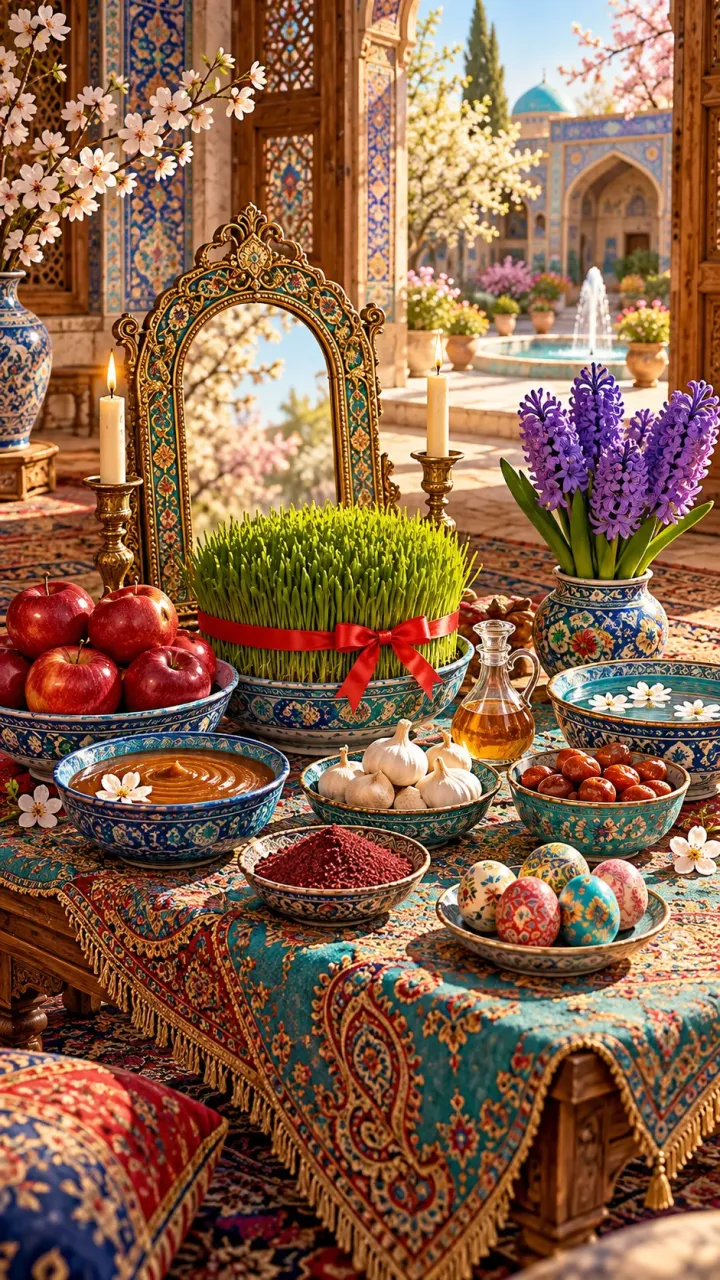
Nowruz means “new day”. It is the Persian New Year, and it begins at the exact moment spring arrives, around March 20 or 21. For more than three thousand years, families have welcomed it with clean homes, new clothes and a table full of meaning.
Today more than 300 million people celebrate it, from Iran and Afghanistan to Central Asia and families all over the world. For a child growing up in Canada or the US, Nowruz can be the strongest link to Iran, if it is shared in a way they can see, touch and taste.
Nowruz in one sentence, for a child
“Nowruz is the birthday of spring: the day the earth wakes up, and we wake up with it, with a clean house, new clothes and hugs from the people we love.”
The Haft-Sin: seven things that start with “S”
The heart of Nowruz is the Haft-Sin table. Its seven main items all start with the Persian letter sin (S), and each one carries a wish for the new year:
- Sabzeh (sprouts): new life and growth.
- Samanu (sweet wheat pudding): strength and plenty.
- Senjed (dried oleaster fruit): love.
- Sir (garlic): good health.
- Sib (apple): beauty and health.
- Somaq (sumac): the colour of sunrise, a fresh start.
- Serkeh (vinegar): patience and the wisdom of age.
The rest of the table
Families also add a mirror, candles, painted eggs, coins, hyacinths and a book of poetry. Many families now use a ceramic or paper fish instead of a live goldfish, which is easier to look after and just as pretty.
The moment of the New Year
At the exact moment of the New Year, called Saal Tahvil, the family sits around the Haft-Sin, even if it falls in the middle of the night. Then come hugs, sweets and eidi: new banknotes or small gifts that elders give to children.
Over the next two weeks, families visit each other, the younger ones usually visiting the elders first. On the thirteenth day, Sizdah Bedar, everyone goes outdoors for a picnic, and the sabzeh is returned to running water.
Celebrating with your child abroad
- Grow sabzeh together two weeks before Nowruz: soak lentils or wheat, keep them damp on a plate, and watch them grow every day.
- In the last week, let your child add one Haft-Sin item each day and tell them what it means.
- Video call the grandparents at the moment of Saal Tahvil, even if the time is odd.
- Ask your child’s school or daycare if you can bring a small Haft-Sin. Many classes are happy to learn about it.
- Give eidi in a little envelope with a note in Persian.
- On Sizdah Bedar, go to a park and let your child tie a knot in the sabzeh and make a wish.